
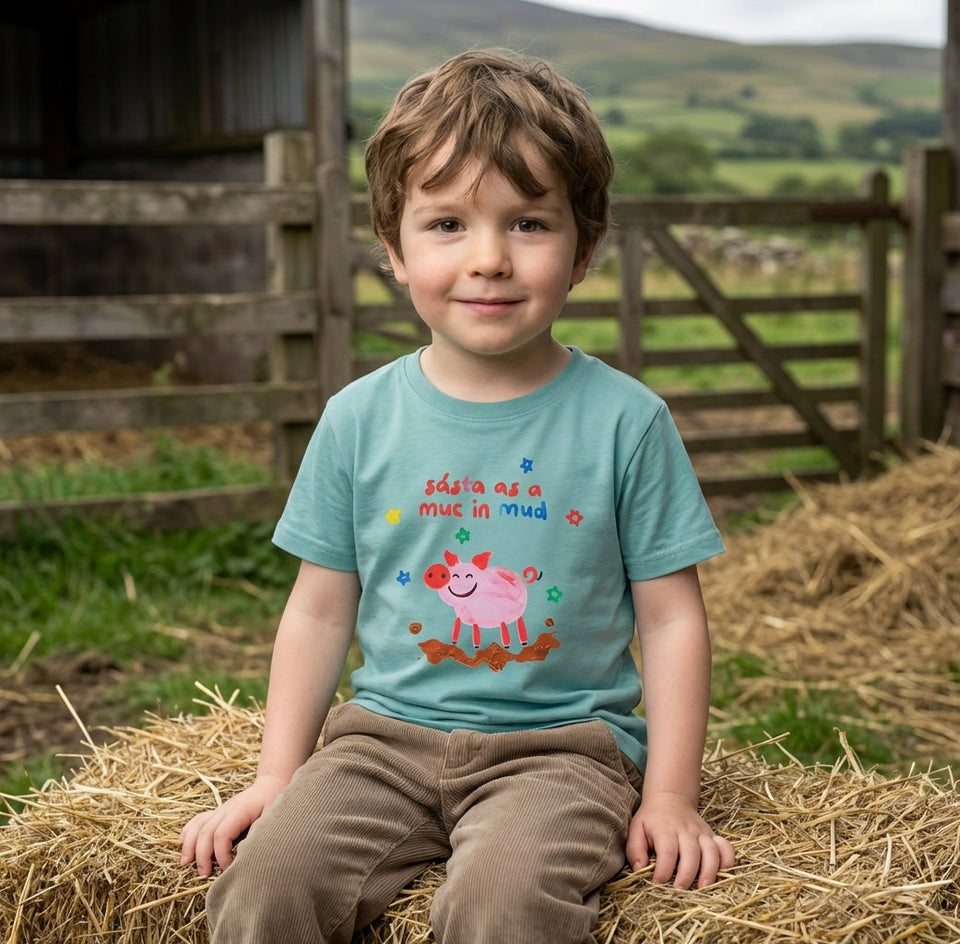
You don't need to be a fluent Irish speaker to bring the language into your family's life. Most of us learned Irish at school, let it drift during college, and now find ourselves wanting our own children to have a better relationship with it than we did.
The good news? Even small, consistent moments of Irish at home can make a real difference. Here are some simple ways to keep the language alive in your family - no fluency required.
Start with What You Remember
You probably remember more Irish than you think. Colours, numbers, animals, weather, basic greetings - these are the building blocks, and they're perfect for young children. Use them naturally: count the stairs in Irish, name the colours of the cars in the car park, say slán instead of goodbye at the school gate.
It doesn't matter if your pronunciation isn't perfect. What matters is that your child hears the language at home, not just at school. That makes it real.
Make It Visual
Children respond to what they see around them. When Irish words are visible - on a t-shirt, on a poster, on their lunchbox - the language becomes part of their environment. They don't have to study it; they absorb it.
That's the thinking behind Glasóg. When your child wears a hoodie with Cois Farraige on the front, other kids ask what it means. Your child explains it. And suddenly they're teaching Irish to their friends without even trying.
Use Irish for Routines
Routines are powerful because they repeat. Pick one daily routine and sprinkle in some Irish:
- Mealtimes: An bhfuil ocras ort? (Are you hungry?) Tá sé blasta! (It's delicious!)
- Bedtime: Oíche mhaith (Good night). Codladh sámh (Sleep well).
- Getting dressed: Name the colours. Léine ghorm (blue shirt). Bróga dearga (red shoes).
- Walking to school: Féach! Éan! (Look! A bird!) Cén saghas crann é sin? (What kind of tree is that?)
You don't need to sustain a full conversation. A phrase here and there, woven into things you already do, is more than enough.
Let Technology Help
There are brilliant free resources available now that didn't exist when we were in school:
- ABAIR.ie - A speech synthesis tool from Trinity College Dublin. Type any Irish word or phrase and hear it spoken aloud in different dialects. We use ABAIR audio on every Glasóg product page.
- Foclóir.ie - The definitive online Irish-English dictionary. Quick, reliable, and free.
- TG4 Player - Irish-language TV for kids: Cúla4 cartoons, nature documentaries, and more.
- Duolingo - The Irish course is surprisingly good for refreshing what you learned at school.
Connect to Place
Ireland's landscape is full of Irish. Place names, street signs, mountain names, townlands - once you start looking, it's everywhere. Turn a car journey into a game: who can spot the most Irish place names? What does Baile mean? (Town.) What about Cill? (Church.) Lios? (Fort.)
This is where words like sliabh (mountain), coill (forest), and cois farraige (by the sea) come alive. They're not vocabulary to memorise - they're words your child can point to and touch.
It Doesn't Have to Be All or Nothing
The biggest barrier for most parents isn't ability - it's confidence. We worry that our Irish isn't good enough, that we'll say it wrong, that we'll confuse the kids. But children don't need perfection. They need presence. They need to see that you value the language enough to try.
Every slán at the school gate, every maith thú at the football match, every sionnach spotted on a walk - it all adds up. And one day, your child will know more Irish than you do. That's the goal.
Browse the Glasóg collection - every piece teaches a real Irish word, with a pronunciation guide so the whole family can practise together.